
In the Carrefour the other day, shopping for groceries, I spied some Digestive biscuits and felt an obscure kind of joy that immediately brought to mind Marcel Proust’s rumination about the madeleine. I’m no Proust, so if you want to read something extraordinary, please click away from this post and read this instead. I promise it is worth the 8 minutes that the website informs you it will take (who counts minutes when reading Proust? this feels a little like sacrilege.) But if you are interested in knowing why I love Digestives, or you’ve come back from your madeleine reverie, read on.
Wikipedia informs me that digestive biscuits, lower-case “d”, were invented in Scotland in the 1830s and were originally meant to help with digestion because they included baking soda, which is good for an upset stomach. When I think of Digestives I think of the ones manufactured by the British company McVitie’s, which I first encountered in Beijing in the summer of 1996. Apparently McVitie’s had been making the things for over a hundred years by that time, but it was the first time I had ever come across them. At the time I did not know they were British—in fact, when I moved to Cambridge a few years later, I was surprised and delighted to find that they had Digestives there too!
Anyway, the McVitie’s version is a kind of grainy, not-terribly-sweet cookie about the diameter of a hockey puck. If it doesn’t sound that good, that’s because honestly, it isn’t. When it’s covered in chocolate, as some are, it’s much more appealing. But as I remember it the ones in Beijing were plain—they were sold in a small shop that didn’t have good air conditioning and I think the chocolate-topped kind would have been a mess. Sans chocolate, they would definitely not rank among my top 5 or 10 cookies if they had no sentimental value. Even with chocolate they’d struggle to make the list.

And yet, for me, the Digestive became a kind of comfort food at a time when nothing was comfortable. I was twenty years old and it was my first time studying abroad, my first time living in China. Beijing was hot and crowded and noisy. My roommate and I slept under mosquito nets but I didn’t really know how to use one. I often woke up in the morning to find several bloated, happy mosquitoes flying around drunkenly inside the net. I was a runner but I had been warned against jogging outdoors because the pollution was so severe. I have a vivid memory of walking along a hazy lane on the Beijing Normal University campus in intense heat, the electric buzz of cicadas all around, noticing how dusty the leaves of the trees lining the lane were. I remember things as just slightly tanner than their real color—and I don’t think that is nostalgic sepia tinting my memories. Outdoors, surfaces really were covered in a fine brown-whitish film of pollution.
But for all that, I loved being there. Beijing in the mid-1990s was the most exciting place I had ever been. The place was bursting with optimism and movement. It seemed like everyone had a dream or a plan. The streetscape was being dismantled and rebuilt all around me. One of the first new characters I learned that summer was 拆,chāi, which means “tear it down.” It was spray painted on walls everywhere I looked, a beacon to wrecking crews and a warning to residents that this building was not long for the world. Here a chai, there a chai, everywhere a chai chai.
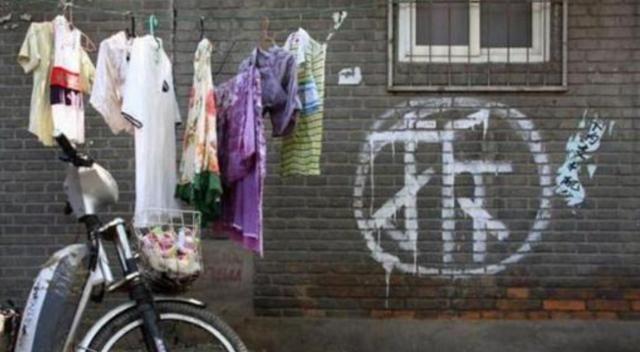
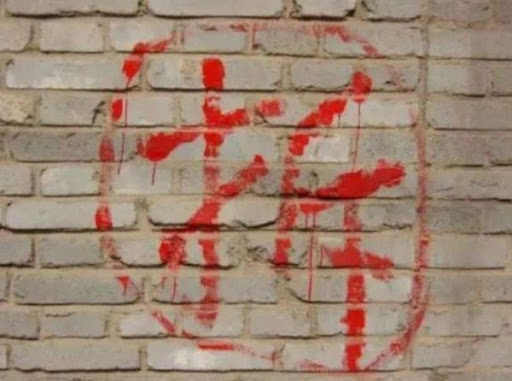
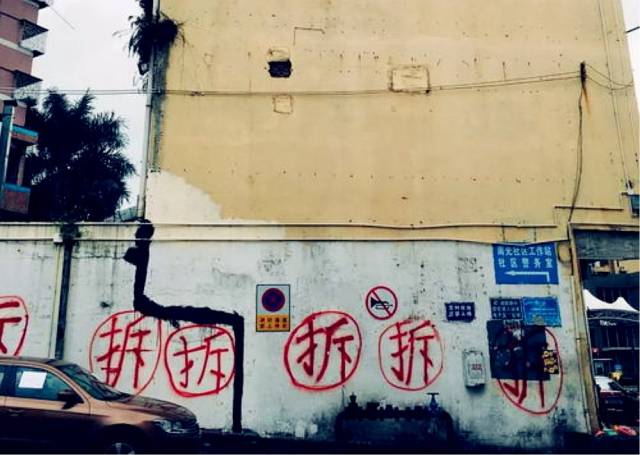
Destruction and construction crews were all over the place, and they had a remarkably high ratio of personnel to work done. It often seemed like there were four or five guys standing around smoking while one guy swung a sledgehammer.Half of them would have their t-shirts rolled up to their chests, exposing relaxed bellies.
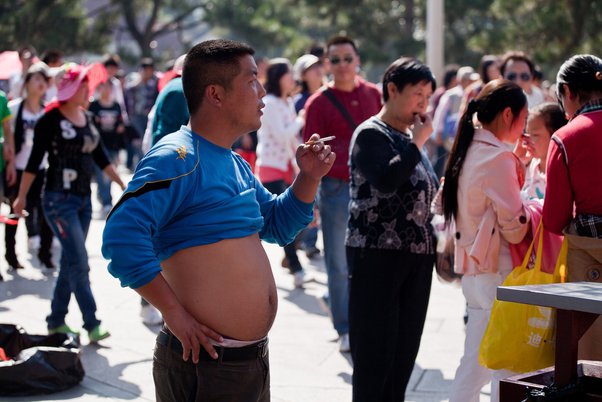
For all the inefficiency of the breaking down and building up, it proceeded remarkably quickly—crews worked through the night and on weekends. Buildings fell and rose in the nine weeks my classmates and I were there. Bicycles, buses and taxis ruled the streets and had to contend with comparatively few private cars and the occasional donkey cart. It was a thrilling, disorienting time.
Food was one of the things that was hardest to get used to. Most Chinese food was unfamiliar to me. I didn’t know where to eat or what to eat, and my stomach often informed me after the fact that I’d chosen poorly. I don’t recall what the dining provisions in our program were—maybe we had access to the cafeteria at Beijing Normal, where the program was based? But I think we often dined out in little holes in the wall in the neighborhood. One of my clearest memories is of the very first meal I had. My roommate and I, newly introduced to one another, went to a small restaurant together for lunch. The air was hazy with cigarette smoke and the waitress seated us next to a loud group of men who were drinking and spitting. She brought us a multi-page menu that was a long list of dishes—what seemed like hundreds of items—in Chinese characters. My brain, in a state of sensory overload and equipped with just two years of Chinese classes, gave up almost as soon as I opened the menu (even now, with a much higher level of language proficiency, I still feel more or less this way when confronted with a restaurant menu).

My new roommate found a thing made of characters that we both recognized—zhū ròu sī 猪肉丝, shredded pork. So she ordered it. Then I ordered the same thing. The waitress balked. “You want,” she paused, probably hoping to make us realize how ridiculous this was, “two servings of shredded pork.” Uh-huh, we nodded. She shrugged. “Hǎo (okay).” A few minutes later she brought out our lunch: two steaming piles of meat cut into thin strips about the length and width of small caterpillars, a slightly pinkish-white color. And nothing else. Discouragement set in as we grimly made our way through our respective meat heaps. I had learned lesson one about eating in China: when dining family style, order different dishes and share.
Considering the kind of culinary sophistication I was bringing to the table, it will not surprise you to learn that I did not eat all that well that summer. I did get better at it and found some foods that I truly loved (especially the simplest delights, like boiled dumplings and jiān bǐng 煎餅, the egg pancakes cooked up on a griddle at a roadside cart). I even got adventurous and tried snake at an ethnic Dai restaurant. But I often felt hungry, and a piece of vocabulary from my first year of Chinese, which for the previous couple of years had mostly been lying around with nothing to do, started to get a real workout: lā dùzi 拉肚子. If you can’t guess from context what that one means, you can always put it in Google Translate.
Anyway, the little convenience store that I visited between morning and afternoon classes sold a sleeve of something called Digestive Biscuits, and I decided to give them a try. They weren’t great. A little bran-ier than I typically appreciate in a baked good. They were solid, though, and unobjectionable, and their earthy moniker and mediocre taste convinced me that they were therapeutic—which, in turn, made them actually therapeutic. Well, it was either the power of suggestion or the baking soda, I guess. The convenience store also sold sleeves of Oreos, and I bought those too, but I had less faith in their fortifying power. And in any case, Oreos have featured too extensively in my life to specifically conjure up this one summer the way Digestives do.
I don’t know what percentage of my total calorie count in the summer of 1996 ended up coming from Digestive Biscuits, but it was significant. Like Proust, I sometimes have a hard time recalling details from time I spent in a place in my youth, and though I have the advantage of the all-seeing Internet, which he did not, it is no help. Yes, you can get pictures of the Beijing Normal University campus online, but they don’t look like it looked then to me. The photos online are sterile, all blue skies and glass and steel, showing off the university’s shiny new buildings. But give me a Digestive, and it comes flooding back: the soot-muted colors, the heat, the cicadas, the dorm-room mosquito nets, all the people hustling their way forward into an uncertain future. The Digestive was no delicate crumble of tea-soaked pastry, but then Beijing in the 1990s was no nineteenth-century French village. It was a gritty biscuit for a gritty time.